Predictive constraints on vision
Despite gaps in sensory input and attention, conscious experience feels rich and continuous. One possibility is that the mind intelligently bridges those gaps. To test that, I embedded films with brief temporal disruptions — jumps forward or backward in time, triggered during saccades, when processing is already interrupted. Participants are required to report these "glitches" by pressing a button.
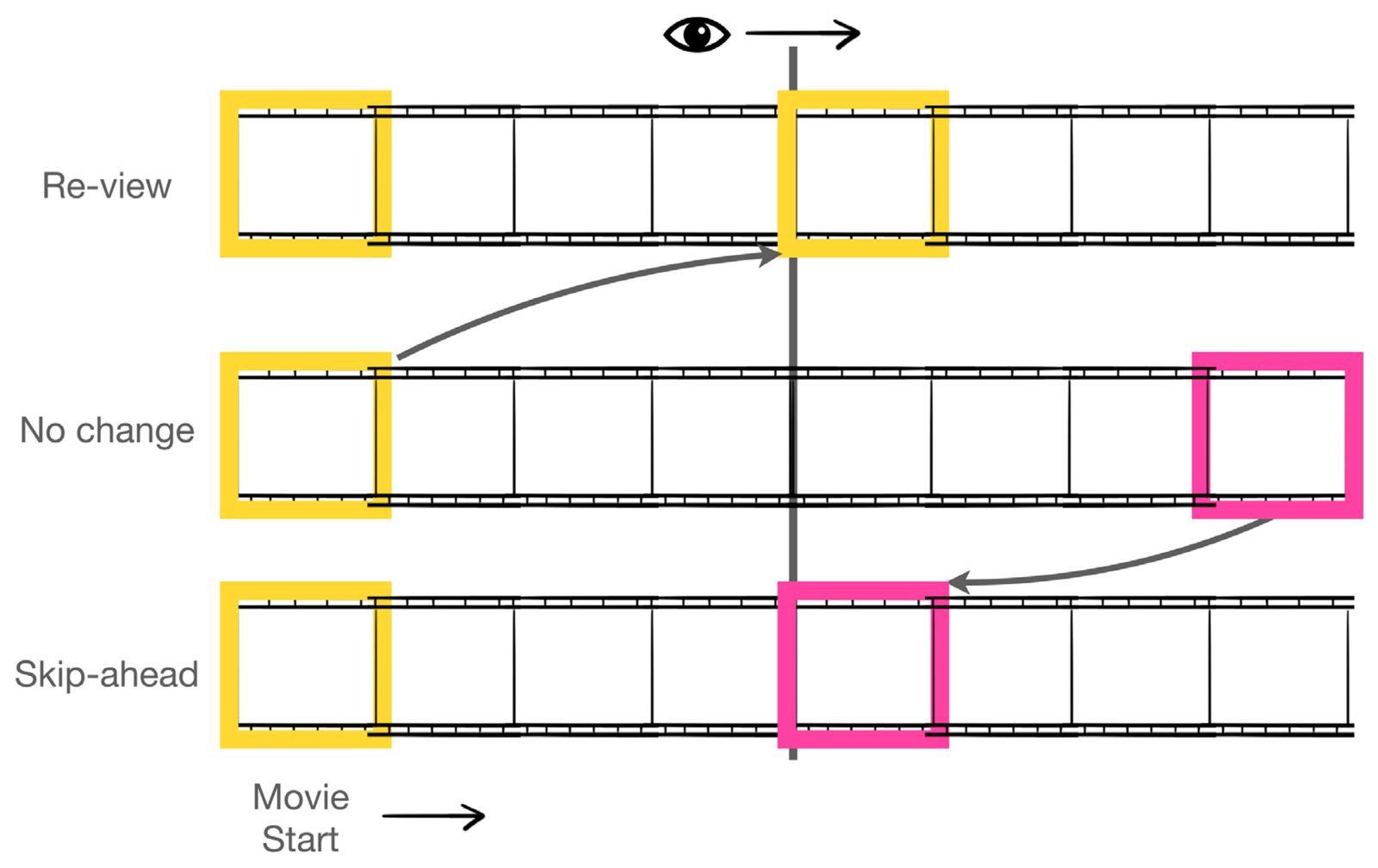
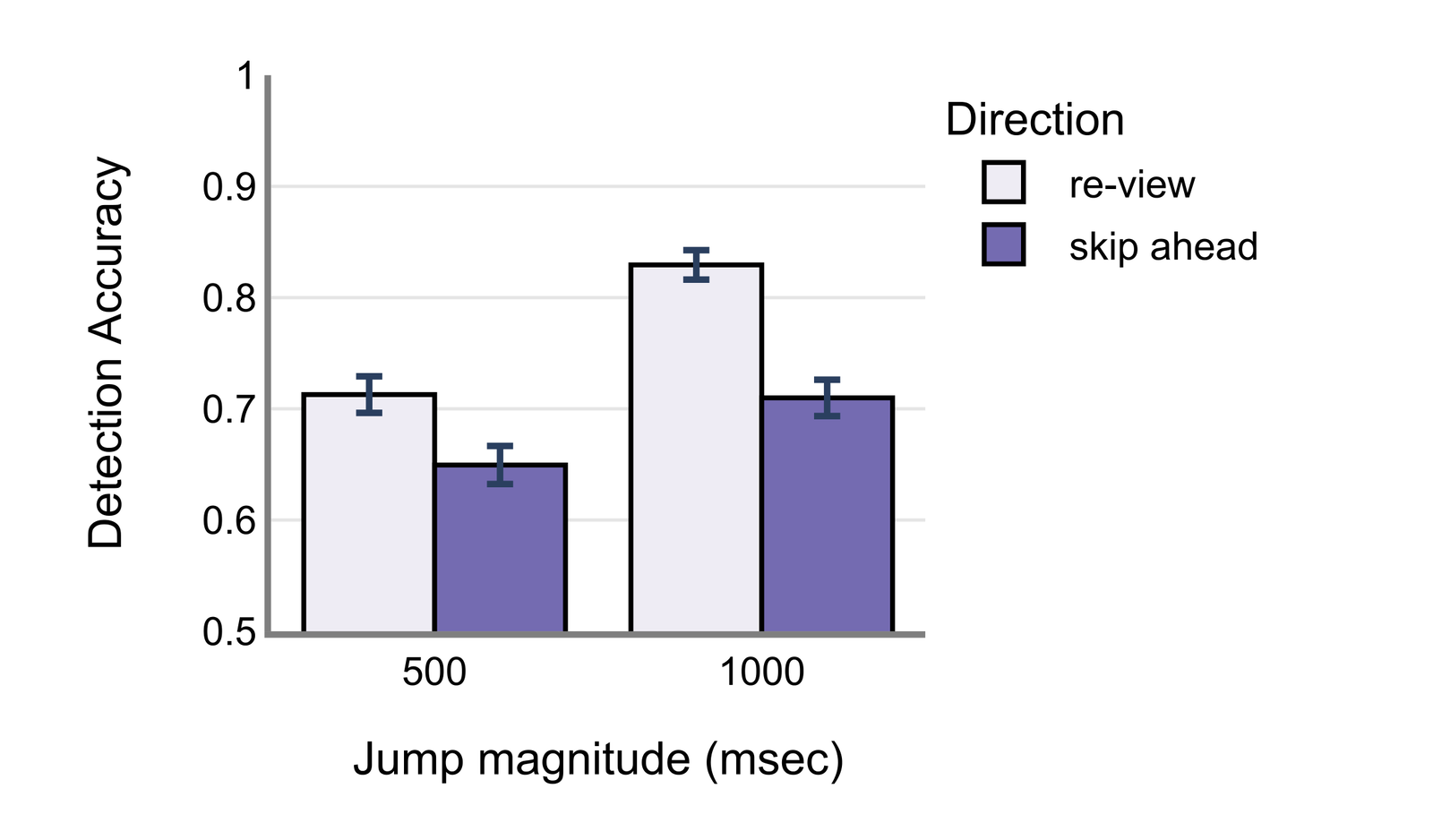
Detection stayed well below ceiling: even substantial temporal violations often go unnoticed. And participants were less sensitive to forward than to backward jumps — disruptions that run with the anticipated trajectory of an unfolding experience are missed more often than those that violate it. Replicating the paradigm with flicker-contingent changes, yoked to brief blank screens rather than to eye movements, left the asymmetry intact. The effect reflects broad principles of temporal prediction, not low-level oculomotor suppression.
Upadhyayula & Henderson (2023), Journal of Vision · (2024), Attention, Perception & Psychophysics. JoV · AP&P · JoV data · AP&P data · Try the demo · Blog post