Skip to content

Why can we only track a few things at once?

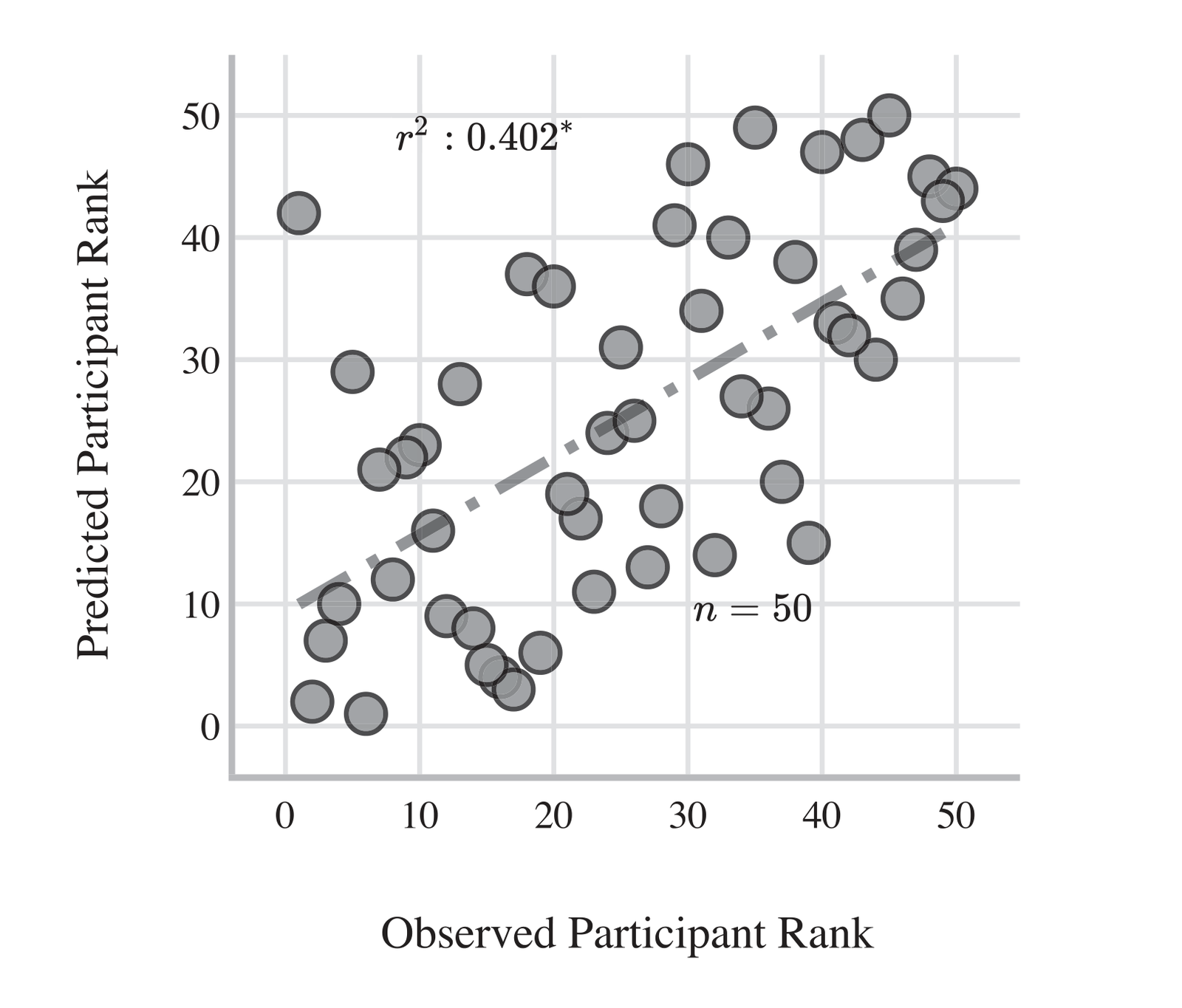
Watch a shell game and you lose the ball. The usual explanation appeals to "mental effort," which is hard to pin down. My explanation is simpler: where you look. I built a model that takes a participant's own eye movements as input and tracks the targets the way they did โ€” and it predicts who will be good at the task and who won't.
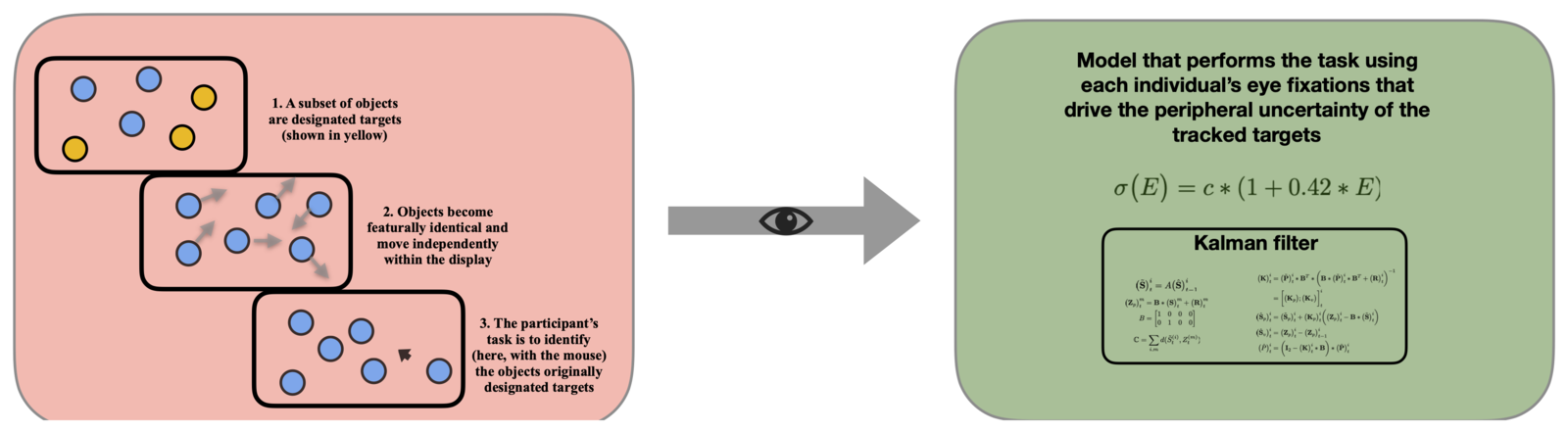
Task and model schematic: participants track a subset of featurally identical moving objects, and a Kalman filter model performs the same task using each individual's eye fixations, which drive peripheral uncertainty about the tracked targets
The task and the model. Peripheral uncertainty about each target grows with its eccentricity from the current fixation, and a Kalman filter tracks the targets under that uncertainty โ€” so a participant's own fixations drive the model's performance.

Model predicts individual differences in multiple object tracking

Upadhyayula & Flombaum (2020), Cognition. PDF ยท Code


Back to How is information perceived?